In Conversation No.5 : The Met: A History of a Museum and its People
Oct
8
5:30 pm17:30

In Conversation No.5 : The Met: A History of a Museum and its People

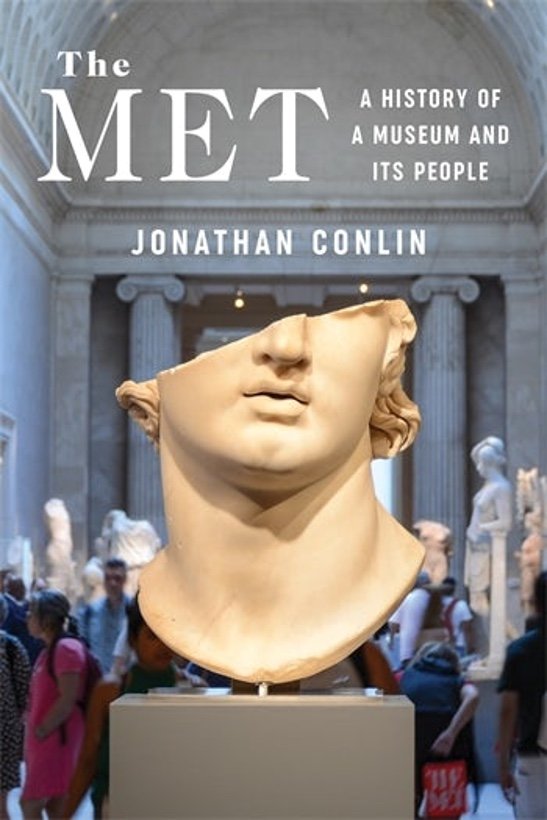
How do you write the history of an iconic museum? MGHG’s fifth In Conversation event offers the opportunity to hear from Professor Jonathan Conlin about his experiences of tracing the development of the Metropolitan Museum of Art, New York, from its 19th century beginnings to the institution of today. Based on extensive archival research and interviews with the Met’s staff past and present, this demonstrates that concerns and challenges regarding visitors and their responses, the ethics of collecting, and the power structures behind decision-making have always been present throughout the museum’s history, though their focus may have changed.


Professor Conlin will discuss his book The Met: A History of a Museum and Its People (Columbia University Press, 2024), and his approach to writing museum histories and institutional biographies – both authorised and unauthorised – with MGHG Board member Dr Anna Reeve. Join us for a look behind the public face of the museum, and an exploration of the people, objects and contexts that made it what it is today.

Professor Jonathan Conlin is Professor of Modern History at the University of Southampton, with expertise in cultural history from c. 1700 to the present; his current projects range from a biography of the Chevalière D'Eon, the French trans diplomat and spy (published this November), to a social and cultural history of Heathrow Airport. As well as his work on the Metropolitan Museum of Art, New York, he was commissioned by the National Gallery, London to write its authorized bicentenary history.

Dr Anna Reeve is Secretary to the Museums and Galleries History Group, and a Research Fellow at the Institute of Classical Studies, School of Advanced Study, University of London. Her research focuses on the routes of Cypriot antiquities from Cyprus to UK museums in the 19th and early 20th centuries, and she teaches Classics as an Associate Lecturer at the Open University.

Book your ticket. Free to MGHG members.

View Event →
Oct
16
11:00 am11:00

Postgraduate Workshop 2026: ‘What is Museum History?’

MGHG & AHRC Collaborative Doctoral Partnerships Consortium Workshop 2026


‘What is Museum History?’

Royal Botanic Gardens Kew, London

Friday 16 October 2026

10:30 – 17:00 

Have you ever wondered what we mean when we say ‘museum history’? 

If you are a Postgraduate Student or Postgraduate Researcher working on the history of museums, then this is the workshop for you!

Both ‘history’ and the ‘museum’ are contested concepts. Where museums can make claims about history through their displays, historians can make claims about museums through their narrativizing of the past. This Postgraduate Student and Postgraduate Researcher workshop reflects on the ways in which these claims are made and, crucially, the intersections between museums and history. Designed to provide Postgraduates with an overview of methodological and historiographical approaches to museum history, and organised by the MGHG in collaboration with the AHRC Collaborative Doctoral Partnerships (CDP) Consortium based at the V&A, the workshop will be based on a format of ‘case studies’, unpacked through group work in three workshop sessions, assisted by respondents from museums, heritage organisations and academia.

Our workshop will consist of THREE key group work sessions focused on (1) Theories; (2) Practices; and (3) Challenging the Museum Paradigm. Each session will explore the assumptions that underpin museum histories, the different theoretical approaches to museum history, and the opportunities presented by global, cross-cultural, and comparative perspectives


Call for Case-Studies

If you are a postgraduate student or postgraduate researcher working on museums and history, we want to hear from you.

To participate, please send us a case study that focuses on museum history. This could be the focus of your current postgraduate thesis (both taught programmes and research programmes), a key text or theory, a museum or collection or exhibition (historic or contemporary), an image, film, object or example of intangible heritage that can act as a catalyst for a workshop discussion on museums and history. Submissions can be in any format, but they should demonstrate how they will address ‘museum history’

Please note this is not a call for presentation of a paper, case studies will instead be used to facilitate discussion in the workshop.

Please send us your suggestions for a case study, together with 2 or 3 questions that the case study might raise (maximum of 250 words in total), together with information on your affiliation and your status as a taught postgraduate or postgraduate researcher. Please email to: contact@mghg.info. The deadline for submission of case studies is Tuesday 15th September 2026.

Please note: places at the workshop are limited. The CDP Consortium is providing some funding to cover travel costs for attendees who require it, but cannot guarantee this for all participants. Please provide a short statement along with your submitted case study if you would like to request funding for travel costs. Depending on demand we may need to prioritise covering travel costs for those without institutional funding available to them or those travelling long distances.

Please Note: Student Membership of MGHG (£15 p.a.) is required to participate in this workshop – see details of membership.

For enquiries or questions please email MGHG – contact@mghg.info

Combined logo of the V&A and UKRI Arts and Humanities Research Council
View Event →

Aug
6
5:30 pm17:30

In Conversation No. 4: Sold! Year of the Dealer

Join us as we discuss the Year of the Dealer – a research project exploring the role of dealers in the biographies of museum objects.

The fourth in our series of online 'MGHG In Conversation' events considers the hidden stories of museum objects via their journeys from the cut-and-thrust of the antiques trade to the custodianship of the nation’s great collections.

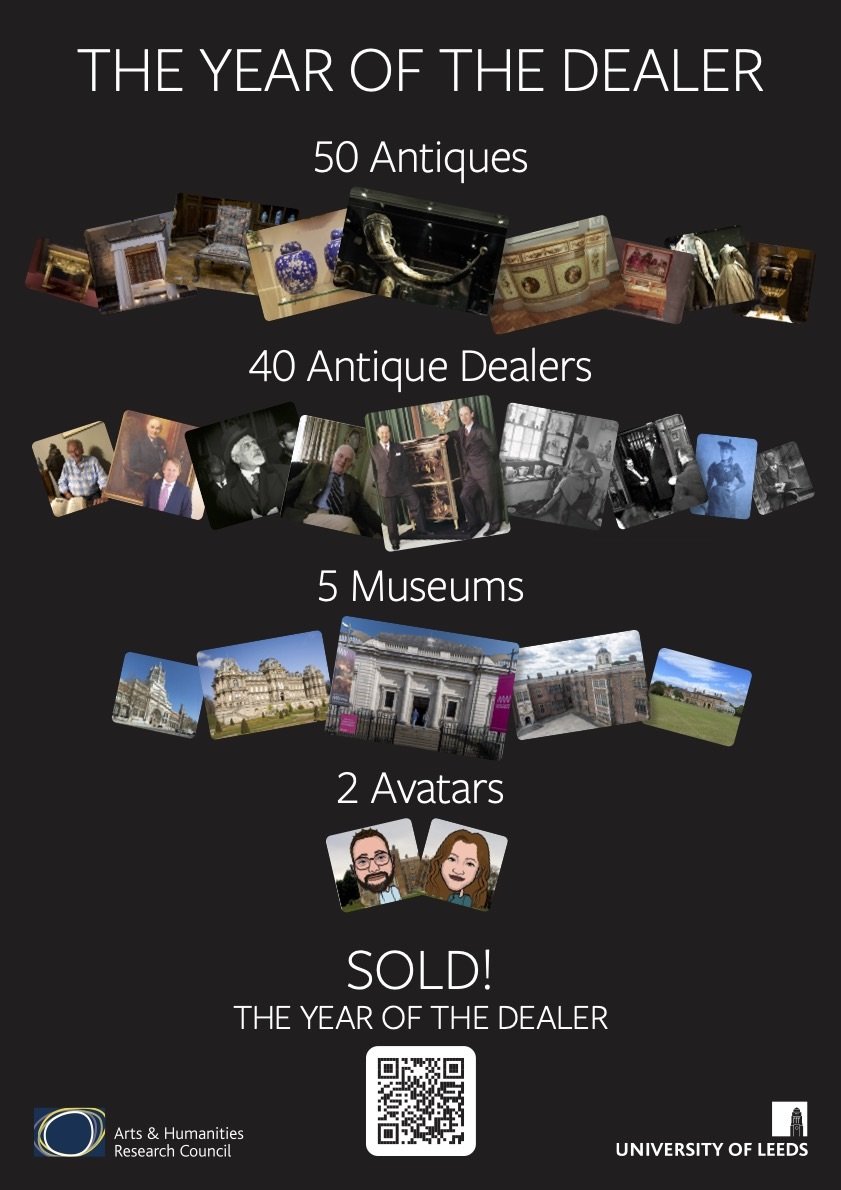
Professor Mark Westgarth (University of Leeds) and Dr Caroline Cornish (Royal Botanic Gardens, Kew) will be discussing the latest chapter in Mark's Sold! Year of the Dealer project – a series of digital trails highlighting the role of dealers in the biographies of objects at five UK museums. In collaboration with The Bowes Museum, The Lady Lever Art Gallery, Preston Park Museum, Temple Newsam and the V&A, the Year of the Dealer project draws together several years of research, including museum and dealers’ archives, auction catalogue records and oral history interviews, to bring these previously little-known stories to life.

Book your ticket via Eventbrite. Free to MGHG members.

Poster for the Year of the Dealer. The text reads: '50 Antiques, 40 Antique Dealers, 5 museums, 2 Avatars, Sold!
View Event →
Oct
22
5:30 pm17:30

In Conversation No.3

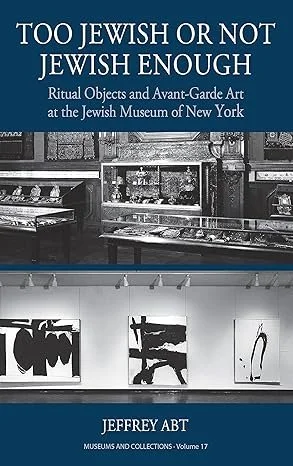
Join us for the third in our series of online 'MGHG In Conversation' events with Professor Jeffrey Abt (Wayne State University, Detroit, Michigan) and Dr Susanna Avery-Quash (MGHG Board Member & Senior Research Lead: Partnerships, Networks, Initiatives at the National Gallery, London). Chaired by Caroline Cornish. The discussion will focus on Jeffrey's recent book, 'Too Jewish or Not Jewish Enough: Ritual Objects and Avant-Garde Art at the Jewish Museum in New York' (2024).

This event is hosted by the Museums and Galleries History Group- tickets are free for all current members; £5 for non-members (see link to booking below)

The In Conversation starts at 5.30pm UK time (6.30pm Central European Time; 12.30pm USA, Eastern Time).

View Event →
Sept
26
to 27 Sept

Conference: Creating the Museum: exploring the museum impulse in local, regional and national contexts

  • Google Calendar ICS

Creating the Museum:  exploring the museum impulse in local, regional and national contexts

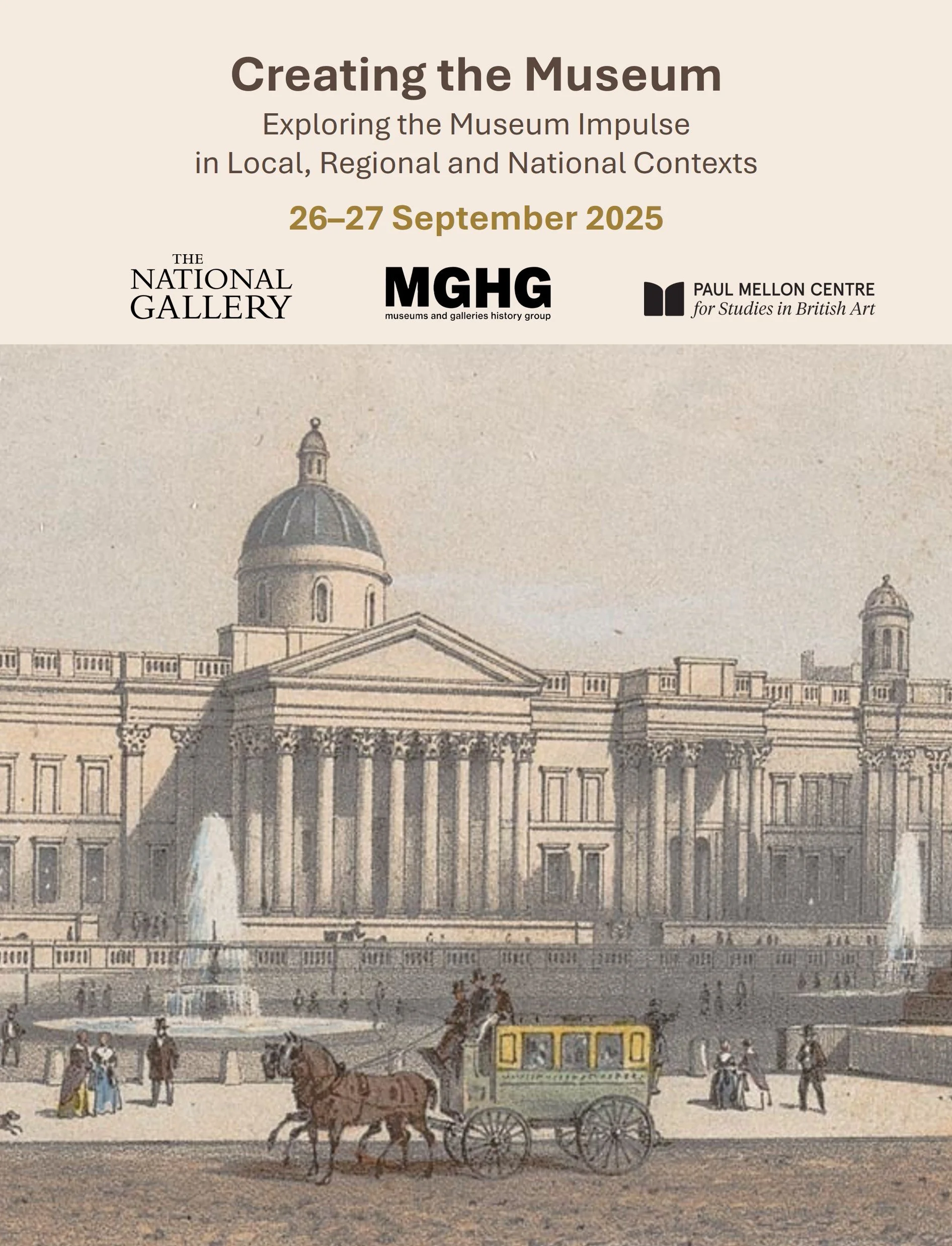
Conference – The National Gallery and The Museums & Galleries History Group (MGHG) (National Gallery, London, 26th-27th September 2025

 While the birth of the concept of the museum has attracted lots of scholarly attention and the desire to create new museums is now a global phenomenon, the question of how individual museums, their collections, buildings, and personnel, come into being has not been widely considered. As complex organisations, the ways in which particular museums have been created involves a multifaceted set of initiatives, practices and activities – raising money, sourcing or commissioning buildings and storage, assembling, organising and interpreting collections, developing expertise, engaging communities, fulfilling a purpose which some groups were more able to prosecute than others.

Various periods have seen the flourishing of local, regional, national museums, of large or smaller scale, and of different specialisms and audiences, with varying models of governance. Some passionately wished for museums ultimately stalled, and some proposed museums never quite appeared. Some museums were created for particular audiences, at particular moments, while others evolved from earlier forms of collecting; some required particular buildings in order to begin; some have taken up residence like hermit crabs in whichever spaces were available.

To develop our understanding of the reasons for creating museums, and to coincide with the 200th anniversary of the creation of the National Gallery in London, we invite proposals for a conference hosted by the National Gallery and the Museums & Galleries History Group.  The conference will focus on why and how galleries and museums internationally/globally have emerged and evolved. 

The conference will explore the different ways in which museums and public art galleries come into existence and the impulses, rationales and objectives for ‘creating’ museums, foregrounding the wide range and variety of museum creation, and exploring core questions of purpose, meaning and context, whilst also drawing attention to the specificity of the National Gallery, reflecting on the contexts for its founding impulses and exploring the future roles, purpose, and functions of (inter)national galleries.

The MGHG and The National Gallery are very grateful to the Paul Mellon Centre for Studies in British Art for generously supporting the forthcoming conference.

BOOKINGS are now OPEN for the MGHG/NG Conference - you can book for in person via this LINK £30 for Standard Tickets, MGHG Members £15.

You can book for on-line via this LINK £10 for Standard Tickets, MGHG Members £5.


Please find the Conference Schedule HERE

Please find the Conference Programme HERE

View Event →
May
13
5:00 pm17:00

In Conversation No.2

The Second in our new series of MGHG In Conversation events will be on TUESDAY 13th May 5.00pm-6.00pm. The In Conversation is between Dr Anne Nellis Richter of Smith College, Northampton, Massachusetts and Dr Susanna Avery-Quash, MGHG Board Member and Senior Researcher Curator at the National Gallery, London. The In Conversation will focus on Anne’s recent book The Gallery at Cleveland House: Displaying Art and Society in late Georgian London (2024).

Bookings via Eventbrite - FREE for MGHG members; £5 for Non-members. You can book via Eventbrite - click here:

Attendees will be sent a TEAMS link to the In Conversation nearer the time.

View Event →
Nov
25
5:30 pm17:30

Online In Conversation Events - No 1

Join us for a the first of a NEW SERIES of MGHG online In Conversation Events over the coming year. The first in the new series is a discussion on museum and exhibition cultures in the 19th century and beyond with Dr Rebecca Wade and Dr Claire Wintle, hosted by MGHG Chair Mark Westgarth.    

Rebecca Wade and Claire Wintle have both recently published books on public exhibition cultures - Rebecca's  An Exhibition History of Victorian Leeds (2023) is a groundbreaking account of public exhibitions in Leeds in the nineteenth century, taking in the establishment of Leeds Art Gallery; Claire's edited volume (with Kate Guy and Hajra Williams), Histories of Exhibition Design in the Museum: Makers, Process and Practice (2023) offers a 'behind the scenes' investigation of museum exhibition design from the 19th century to more recent times.  Both authors will be in conversation with each other and with Mark Westgarth at this exclusive MGHG event. There will also be an opportunity for the online audience to put questions to Rebecca and Claire.

20% Discounts on Claire and Rebecca’s books will be available to participants.

Dr Rebecca Wade

Dr Claire Wintle

The In Conversation event is FREE for MGHG members; £5 for non-MGHG members. This is an online event via Microsoft Teams.  To register for this event please book tickets via Eventbrite. A Teams link will be sent to all registered participants.

Our next In Conversation events (number 2 & 3 in our new series) will take place in January 2025 (date TBC), with Philip Deans talking about his new book on Museums of Conflict; and in April 2025 (date TBC) with Anne Nellis Richter talking about her latest book, The Gallery at Cleveland House: displaying art and society in late Georgian London. Do look out for updates.

View Event →
Jan
26
11:00 am11:00

Museum Microhistories

A one-day symposium at the University of Leeds and online. Museum microhistories offer a rich field of potential to explore broader historical questions; in the words of William Blake, ‘see the world in a grain of sand’. Microhistory also aims to highlight the significance of the seemingly insignificant, to focus on the lacunae of history, purposefully drawing in and directing attention towards marginal(ized) voices and perspectives and emphasising the agency of the ‘ordinary’. Microhistory aims to explore the relationships between large historical narratives and individual case studies and to disrupt established grand historical narratives, countering oversimplification. It encourages close analysis of primary source materials ‘with a microscope not a telescope’, ‘following’ clues through sources (Ghobrial 2019).

View Event →
Online Annual Lecture 2023
Sept
26
6:00 pm18:00

Online Annual Lecture 2023

‘A Great Unrecorded History’: LGBTQ+ Histories and Heritage  

Richard Bruce Parkinson

LGBTQ+ desire and identity are embodied in human artefacts across all periods and culture of  world history, from Ancient Egypt to works by living artists such as David Hockney. The lecture will discuss the evolution of a long-term LGBTQ+ world history project at the British Museum in a variety of formats, including the book A Little Gay History (2013), and subsequent exhibitions and trails. It will consider why LGBTQ+ histories are important and how they can be displayed—as temporary interventions or as integrated parts of permanent displays— and reflect on the roles of historians in recent years in presenting this heritage and in upholding human rights. 

Richard Bruce Parkinson is an Egyptologist, who specialises in the poetry of the classic period of ancient Egyptian culture. He was a curator at the British Museum (where projects included the display of the Rosetta Stone and the Nebamun wall-paintings), and is now the statutory Professor of Egyptology at the University of Oxford and a fellow of The Queen’s College, Oxford. Drawing on his museum experience and his work on ancient poetry and its modern receptions, he has also published on LGBTQ+ world history. 

Tickets are free and can be booked online here.

View Event →
Jan
19
10:00 am10:00

Museum History Research: Sources, Methods, Approaches

Jodrell Lecture Theatre, Royal Botanic Garden, Kew

19 January 2023, 10am—4.30pm

MGHG are pleased to announce a PGR/ECR study day to explore methodological approaches to researching museum history. The day is aimed at those working with museum archive material and/or museum objects as part of historical research projects. With keynote contributions from Dr Emma Martin (University of Manchester) and Dr Isobel MacDonald (British Museum), the event will explore different approaches to the range of museum sources, from the data-driven to the object-focused. In a programme incorporating keynote papers, work-in-progress papers, engagement with material from Kew’s museum and archive collections and discussion sessions, it will challenge participants to think about what sorts of history are produced by different sources and analytical approaches, and how we can develop museum history methodologies to explore new aspects of museum history.

View Event →
Jul
7
5:00 pm17:00

AGM & Annual Lecture 2022

To inherit from toxic conservation

Lotte Arndt

After a brief presentation of the international research project Reconnecting Objects. Epistemic Plurality and Transformative Practices in and beyond Museums (2021-2025), my presentation will concentrate on conservation in so called ethnological and natural history museums, and its aftermath. It takes the simultaneity of the rise of conservation as a science and the peak of colonial collecting in the end of the 19-century as its point of departure, to interrogate the lasting consequences of imperial collecting and toxic conservation. As places dedicated to conservation, museums promised the minimization of decay of the objects, and obtained life span prolongation through the isolation of artifacts from living environments, both culturally and materially. Today, demands for restitution and transformative practices question museums as vectors of imperial modernity, and are confronted with the lasting alteration of artifacts by conservation policies, especially in the case of the presence of chemicals. On the basis of heterogenous materials, my presentation asks for practices beyond Eurocentric notions of collecting, conserving, and exhibiting.

Biography

Researcher and curator Lotte Arndt (Paris) accompanies the work of artists who question the postcolonial present and the antinomies of modernity in a transnational perspective. As part of the international project Reconnecting Objects. Epistemic Plurality and Transformative Practices in and beyond Museums, she is currently conducting a research project on biocides and the antinomies of curation in ethnographic museums. Between 2014-2021, she taught at the École supérieure d'art et design Valence Grenoble. She is co-founder of the online journal Trouble dans les collections. Among her projects: Elvia Teotski: Molusma, La Criée, Rennes, Sep 2021; Extractive Landscapes (with Sammy Baloji, Salzburg 2019); Tampered Emotions. Lust for Dust, Triangle France (2018); Candice Lin: A Hard White Body (2017, curated with L. Morin, Bétonsalon, Paris; 2018, with P. Pirotte at Portikus, Frankfurt/Main). Selected publications: Toxic afterlives of colonial collections. Trouble dans les collections, no. 2, September 2021 https://troublesdanslescollections.fr/2246-2/; Candice Lin. A Hard White Body (ed. with Yesomi Umolu), Chicago University Press, 2019; Magazines Do Culture! Postcolonial Negotiations in Parisian Africa-related Periodicals (2047-2012), Trier, WVT, 2016; Crawling Doubles. Colonial Collecting and Affect (ed. with Mathieu K. Abonnenc and Catalina Lozano), B42, 2016; Hunting & Collecting. Sammy Baloji (ed. with Asger Taiaksev), MuZEE, Galerie Imane Farès, 2016.

View Event →
Museum Networks and Museum History Conference
Jul
14
to 16 Jul

Museum Networks and Museum History Conference

Networks have become an increasingly important part of the analytical toolkit used by historians of museums and collections. As scholars have moved away from narrative institutional histories, they have embraced the study of social and material networks as approaches which expand understandings of museums. This conference seeks to take critical stock of the role of networks in understanding the history of museums and collections.

Tickets are available to purchase here.

View Event →
MGHG AGM and Lecture 2019
Jul
4
4:30 pm16:30

MGHG AGM and Lecture 2019

Collections, Non-collections and Ecosystems: Case notes on photographic cultures in the Museum

Professor Elizabeth Edwards

What do photographs ‘do’ in museums? This paper considers the presence of photographs in museums as an ecosystem. This ecosystem is characterised, I suggest, by shifting relationships between formal ‘collections of photographs’ and the museum’s photographic ‘non-collections’ which saturate its practices. In tracing the history of these relationships I shall consider how hierarchies of photographic value have been established, maintained and challenged over time. Drawing on my recent work on the history of photographic cultures at the Victoria and Albert Museum, I consider the dynamic institutional performance of photographs across four key overlapping spaces of gathering and dissemination - the ‘guard-book’ albums, the library, the curatorial departments and through illustrated publications for the public. The V&A provides a particularly pertinent set of ‘case notes’, having developed an extensive relationship with photographs since the 1850s, one of the first museums to do so. Using anthropological concepts and methods to interrogate the matrix of photographic practice, accumulation and purpose, I suggest how thinking about what photographs ‘did ‘and are ’doing’ in museums can illuminate the epistemic values that shape them, and as such, constitute a vital yet overlooked strand in the histories of museums.

4.30pm AGM for MGHG Members

5.00pm Refreshments

5.30pm MGHG Lecture

View Event →
Sept
21
4:00 pm16:00

MGHG AGM and Inaugural Annual Lecture

  • Institute for Historical Research (map)
  • Google Calendar ICS

4-4.30pm—MGHG Annual General Meeting

4.30pm-5pm—Refreshments

5pm-6pm—MGHG Annual Lecture

Professor Ludmilla Jordanova (Durham University) Museums, Galleries and the Powers of Portraits

Portraits, whether originals or reproductions, are common in museums, while galleries devoted to them are currently enjoying considerable popularity.  Indeed, portraits have long been displayed to diverse audiences—museums and galleries are important but not the only places where they may be seen.  As a result we have a chance to reflect on how museums and galleries use portraits in the wider context of publications, digital culture and venues where public access is limited. Professor Jordanova will explore the diverse ways in which portraits are put on show and are assumed to offer insights into past times, often through the idioms of heroism and villainy. So portraits are at once ubiquitous, unremarkable, taken for granted, and endowed with the power to evoke specific human beings and prompt a myriad of reactions. What kinds of powers do portraits have? Do these aid historical understanding? And what can usefully be said about the roles they play in museums and galleries?

Free to MGHG members, £9 for non-members and £5 for student non-members

Click here to order your ticket

View Event →